Gilbert sits at a fascinating crossroad for service dog work. The town mixes peaceful neighborhoods and hectic retail passages, one-story workplace parks and sprawling medical complexes, desert routes and weekend celebrations with live music, food trucks, and a sea of fragrances. That mix is perfect for producing reputable service canines, since focus is not forged in a vacuum. It grows from deliberate practice in real diversions, repeated with care, and proofed up until absolutely nothing rattles the dog or breaks the team's rhythm.
I have actually trained and managed dogs through crowds at SanTan Town, through the echoing corridors of Grace Gilbert, across hot car park, and along canals where ducks release themselves like wind-up toys. The objective is always the exact same: a dog that takes in the noise without taking in the stress, makes determined choices, and executes tasks for a handler who may be handling persistent pain, blood sugar swings, PTSD symptoms, or mobility difficulties. The environment is a test, but likewise a teacher. Done right, it teaches composure that lasts.
What "focus" truly indicates in practice
People frequently image focus as a stationary dog looking at its handler. A statue can look excellent however that is not the requirement we utilize for service work. Focus is a set of practices under pressure: orienting back to the handler after noticing something, holding a cue through surprise, recuperating quickly after disruption, and performing tasks with the same precision in an empty hallway as in a loud store. It is dynamic, not stiff. A focused service dog glances at the environment, takes a mental photo, and then returns to the job.
Two measurements matter every day. The very first is latency, the time in between cue and response. The 2nd is mistake rate, how frequently a dog breaks position, misses a job, or lags. When latency stretches or errors accumulate, you have a training issue, not a stubborn dog. Those numbers change with heat, crowds, smells, and handler stress. Gilbert summertimes test all 4 simultaneously. An excellent training plan anticipates those shifts and compensates.
Selecting and preparing the best dog
You can not teach a nerve system to be what it is not. Temperament and health screening cut months of struggle. I search for a dog that surprises however recuperates, chooses people over things, plays with structure, and tolerates disappointment without closing down. Medical clearance matters more than any trick. Joints, eyes, heart, thyroid, and an orthopedic evaluation if movement work is prepared. No shortcuts here.
Early structures need to be boring by style: support mechanics, food drive, toy drive, marker timing, and a clear release. Teach the dog that the release indicates freedom, not the cue. That single detail prevents a waterfall of self-rewarding breaks later in public gain access to training. Build service dog trainer sit, down, stand, and targets with criteria that are black-and-white. Include period gradually while you control just one variable at a time. Accuracy in your home is the most affordable insurance coverage you can buy.
The Gilbert aspect: climate and terrain
Heat and sun alter a training session. Pavement blasts hotter than air by 20 to 40 degrees, which modifies foot comfort and breathing. I schedule pavement sessions at daybreak or after sunset from May through September, with paw checks before and during. Hydration is not a water bowl tossed in the automobile. I prepare for frequent shade breaks, carry a collapsible bowl, and expect panting that shifts from rhythmic to open-mouthed heaving. Heat ramps adrenaline, and adrenaline makes interruption more difficult to filter. If a dog looks sharper and twitchier in August, that is physiology, not attitude.
Then there is desert scent. Javelina, bunny, quail, and the residue of a thousand meals from the food court, all layered on a breeze. Odors struck young canines like social networks notifications, consistent novelty, low effort, high benefit. I resolve it with structured smell permissions. You can smell when I state, for this numerous seconds, in this zone. The clearness decreases disappointment and paradoxically increases handler focus. Rejecting scent entirely in a scent-rich environment is a losing game.
From living room to busy sidewalk: the proofing ladder
Every brand-new dog satisfies a various proofing ladder, however the structure is consistent. I outline five rungs for teams working in Gilbert.
First sounded, neutral home abilities. Teach behaviors in peaceful spaces, then move them into life. If the hint drops throughout the kettle boil, you are not prepared for brunch traffic.
Second sounded, front yard interruptions. Delivery van, kids on scooters, next-door neighbors talking. Train with the gate open so wind and smell move through. Work at distances where the dog can still prosper. That may be 60 feet today and 20 feet in 2 weeks.
Third called, managed public spaces. Select a big car park with foreseeable flow. Practice heel previous shopping carts, stop on line markers, tuck under a bench, and down-stay while a good friend moves a cart close by. Keep repetitions brief and tidy, and feed heavily for disregarding trash and food wrappers.
View Service Dog Training in Gilbert in a full screen map
" width="560" height="315" style="border: none;" allowfullscreen="" >Fourth rung, moderate indoor environments. Craft stores and hardware stores are acoustic minefields with carts, beeps, forklifts, and a rainbow of smells. Walk broad aisles first, then narrow ones. Ask for positions around corners where surprises happen. Practice settling by an entry door, then get in, repeat tasks in three aisles, exit, water, break, and choose whether the dog appears like it can do another loop. End while you are ahead.
Fifth rung, dense public gain access to. Shopping centers on a Saturday night, medical waiting rooms, or farmer's markets. Never start here. Make it. When you go, prepare to depart after wins, not stay until the dog fails. 2 or three clean direct exposures beat a single exhaustion trial.
Marker systems and contingencies that hold under stress
Distraction training requires a reputable language. I utilize three markers regularly: a conditioned reinforcer that suggests a reward is coming, a terminal release, and a redirection marker that tells the dog a better alternative is readily available if it disengages from the distraction. The redirection marker is not a no. It is a signal that work equals support. I teach it in your home on boring objects, then bring it to pastry crumbs on the walkway, and just later on to dropped hotdogs at a tailgate. Pet dogs can not check out legal disclaimers. If the guidelines are fuzzy, they will compose their own.
Contingency preparation matters when the world intrudes. If a kid runs shrieking behind you, what is the most safe default? I train an automated orientation reaction. The minute something bursts into the dog's peripheral vision, it finds out to swing back and check the handler. Orientation ends up being self-reinforcing due to the fact that it constantly leads to clearness and possibly benefit. That single habit prevents a chain of leash tension, handler stun, and escalating arousal.
Task training that makes it through public life
Tasks must be trained to a level where context does not change them. Deep pressure treatment is simple on a peaceful couch, more difficult amid clinking meals and variable surfaces. I teach DPT on a minimum of four textures: tile, polished concrete, rubber, and carpet, then on a bench, then on a chair. Each surface changes the dog's balance and the handler's comfort. If the dog scrabbles or slips, break the task into setup, method, placement, duration, and release, and re-proof each slice.
For mobility assistance, I focus on stationing and load-bearing ethics. A dog should learn to form a trustworthy brace on hint and never guess at pressure. I use a light touch cue that indicates brace all set, then a separate cue that permits weight transfer. That guideline prevents the dog from bracing when the handler is mid-step. In a crowd, that accuracy keeps everybody upright.
Medical alert work trips on detection and dedication. In public, the dog must report in spite of eye contact from complete strangers or a dropped bagel. I teach informs initially as a disturbance of an engaging habits. The dog discovers that leaving a bowl to paw or nose is not only allowed however required when the target smell or physiologic cue appears. Later on, I add false positives and incorrect negatives to maintain discrimination. In locations like Mercy Gilbert, I also train informs near beeping machines with unforeseeable rhythms so mechanical noise does not bleed into the alert chain.
View Service Dog Trainer in Gilbert in a full screen map
" width="560" height="315" style="border: none;" allowfullscreen="" >Building public access habits that feel effortless
Public gain access to is as much choreography as obedience. The dog needs to move through doors without clipping hinges, trip elevators without creeping forward, and settle in such a way that leaves area for other people. I teach an under command that tucks the dog underneath chairs and tables. The hint is position-based, not object-based. Under my leg on a bench, under a restaurant table, under a row of chairs in a waiting room. As soon as the dog learns the geometry, it stops guessing.
People and pets will evaluate your limit work. In retail spaces around Gilbert, personnel are usually courteous however curious. You can not manage others, just your strategy. I teach a neutral leash hold position for welcoming efforts. The dog sits somewhat behind my knee and takes a look at me, not the approaching hand. If the person insists on touching, I move, not the dog. Security and neutrality trump social education for strangers.
Distraction classifications and specific drills
Not all interruptions feel the same to a dog. I sort them into four categories and design drills accordingly.
Motion. Skateboards along the Heritage Path, strollers, grocery carts, scooters. I begin at a hundred feet with the object moving parallel, then decrease range. I teach the dog to heel on the far side of the handler from the things, adding a layer of perceived safety.
Sound. Cart corrals, forklift beeps, blender sounds from smoothie stands, fireworks bleed from sports fields. Sound training works best as paired sessions: sound at low volume, cue, benefit, then sound disappears. The dog learns that sound anticipates work that forecasts reinforcement. Self-reliance follows.
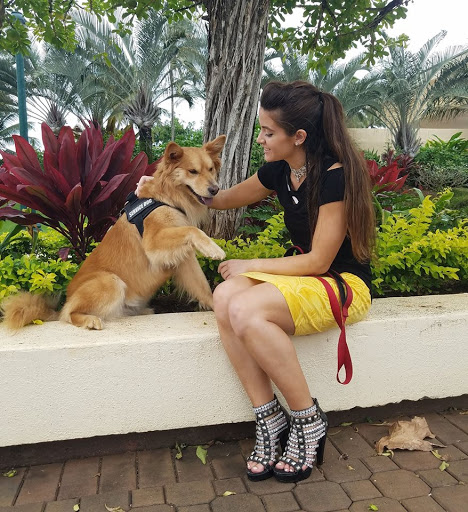
Odor. Food courts, trash can, spilled treats. The rule set is clear. Leave-it is an experienced reaction, not a yelled plea. I teach a quiet leave-it where the dog flicks eyes to me without singing triggers and an allowed smell hint on handler terms. That dual pathway minimizes conflict and protects trust.
Social pressure. Crowds pressing at shop doors, children running arcs, canines on flexi-leads. I form a "bubble" behavior where the dog lines up tight to my leg with head somewhat behind knee when pressure increases. The handler steps to angle the shoulder, developing a wedge that guides traffic. This is choreography once again, and it keeps the dog out of arguments.
The restaurant test, Gilbert edition
Restaurants expose gaps fast. Aromas, foot traffic near tables, chairs scraping, and wait personnel who require clear paths need a dog that can settle for 45 to 90 minutes. I hunt places with outdoor patios before moving inside your home. Patios provide canines more air blood circulation, which helps preserve body temperature level and focus. I pick a corner with a wall behind the dog, and I avoid heating units or fans blowing onto the dog's face. I feed the dog a part of its meals during longer settles, not treats alone, to motivate calm chewing and a constant stomach.
The biggest mistake I see is pushing period too quick. A twenty minute settle with 3 micro breaks works much better than a single long push that ends with restlessness. I use release breaks where we walk to a quiet patch, sniff on consent, water, and return. By the time a dog can complete a full meal service asleep under the table, diversions in other places feel small.
Hospitals, centers, and the ethics of training in sensitive spaces
Medical environments differ from retail. They require sterile behavior routines. I bring a dedicated mat washed without aroma boosters and a little spray bottle of veterinary-safe disinfectant for gross surfaces. Dogs do not touch devices, they do not sniff linens, and they do not approach other clients. If a center enables training visits, I set up during off-peak windows and limitation sessions to short, targeted goals: elevator rides, waiting space settle, narrow corridor death. The handler's health takes concern. If signs intensify, we end, even if the dog looks fresh.
Because smells in hospitals run sharp, I proof orientation twice as much there. Alcohol swabs, bactericides, and blood smell are novel and can briefly detach the dog's attention. Better to expose in low-stakes sessions before a genuine consultation forces the issue.
Handling problems without losing momentum
Progress does not travel in a straight line. A dog that aced a market walk on Thursday can unwind on Saturday after a bad night's sleep, a hot automobile ride, or a handler who feels unhealthy. The answer is to scale the job, not to press through. I keep three variations of every workout ready: the full public version, a medium step-down, and a micro drill that can be done beside the car. If the dog fails 2 repeatings in a row, I drop to the next tier, make simple wins, and end. Banking confidence avoids future avoidance or resistance.
A corollary to this guideline is "secure the cue." If heel ends up being a vague idea that in some cases indicates stay close and sometimes indicates pull and sometimes implies guess, the word declines. When the environment is too difficult, use management, not the precision cue. Step off the primary drag, switch to a hand target and follow behind a parked car row, and request your accurate heel again only when the dog can deliver it.
Handler skills that steady the team
A service dog mirrors its handler's clearness. I coach three handler routines due to the fact that they pay dividends right away. Initially, breathe and release tension in the shoulders before cueing. Dogs read your body like a schedule. Second, stop talking in paragraphs. Usage crisp cues with a one-second time out before repeating. Third, manage the leash with fingertips, not fists. Slack is info and trust. A tight leash tells the dog you expect resistance.
In Gilbert's busier pockets, eye contact from complete strangers is constant. I keep a neutral face and a verbal guard that closes down concerns politely. Something as basic as "Hectic working, thanks" paired with a half-step pivot keeps interest from slipping into interference. If somebody continues, modification place rather than escalate. The dog discovers that the handler manages the scene and preserves the bubble.
Measuring development and understanding when to advance
I track work like a coach. Sessions get short notes: location, time of day, temperature level, primary interruption, latency to three cues, and any mistakes. Patterns show up quickly. If heel latency sneaks from half a 2nd to two, and it only takes place in the afternoon, heat or tiredness remains in play. If leave-it breaks occur near a particular food court, we prepare targeted drills there at 8 a.m. while it is peaceful and construct up.
A rule of thumb helps decide improvement. If the dog can strike requirements throughout 3 sessions in a row with three or fewer small mistakes, we add intricacy or a brand-new area. If errors spike over 5, we hold or step back. That discipline feels sluggish early and conserves months later.
A case example from the East Valley
A young Labrador called Milo came through with a handler handling POTS and migraines. Inside, Milo looked sharp, however outside food smells turned him into a vacuum. He would heel wonderfully previous individuals and then torque toward a napkin like it included buried treasure. Remedying the lunge repaired nothing. We altered the economy. For a week, all support in Robinson Dog Training public came from ignoring floor food, not from heeling past individuals. We treated every piece of garbage like a training opportunity. Techniques were managed, then aborted with a quiet leave-it, and Milo earned a prize for flicking his eyes up. Sessions lasted 10 minutes. By week two, he was scanning the ground and snapping his eyes back to the handler on his own. We chained that behavior to heel, and the vacuum effect vanished without conflict.
The 2nd issue was sound startle inside a tile-heavy coffee shop. We layered in recorded clatter at low volume during meals at home, then checked out the cafe for 2 minutes, sat near the door, and left after two peaceful settles. On the 4th visit, a stack of plates dropped in back. Milo startled, oriented, received a quiet mark and support, and went back to sleep. The team passed their public access test a month later not because Milo learned a brand-new technique, however due to the fact that we repaired the conditions that kept collapsing his focus.
Legal and community awareness
Arizona law tracks carefully with federal ADA guidelines. Personnel might ask 2 questions: whether the dog is a service animal required since of an impairment, and what work or job it has been trained to perform. They can not require papers or presentations, and they can not inquire about the disability. Teams have duties too. Pet dogs must be housebroken and under control. If a dog soils a floor or lunges at someone, a manager can legally ask the group to leave. That standard safeguards the trustworthiness of all working teams.
Gilbert businesses are, in my experience, responsive when groups communicate. A quick discussion with a shop supervisor about where to practice and where to prevent forklift traffic can make a session much safer for everybody. The more we partner with the neighborhood, the more welcome trained groups will remain in intricate environments.
Simple field checklist for a high-distraction session
- Water, bowl, and shade plan matched to time of day and forecast Mat or towel for settles, cleaned up and scent-neutral High-value reinforcers portioned in small pieces, plus regular kibble for duration A and B plans for each exercise, with clear requirements and an exit strategy Short session timing with healing breaks arranged at the start, not as an afterthought
Maintaining efficiency long after graduation
Dogs learn for life. Once a team makes public gain access to proficiency, upkeep keeps it. I rotate easy days with difficulty days. One week may feature a quiet book shop settle and a single market walk. The next consists of a sundown patio meal when live music kicks in. I keep a monthly "novelty day," visiting a place we have actually not trained in for at least 6 months. Novelty uncovers drift before it becomes a problem.
I likewise suggest a quarterly skills audit with a trainer who will tell you the reality. The audit measures basics in 3 brand-new areas, timing, mistake rates, and task reliability under light stressors. Little course corrections now beat huge fixes later.
Above all, remember that focus is a relationship twisted around habits. The best service pets do not ignore the world, they observe it without giving it the keys. Gilbert provides the tests. With a thoughtful ladder, clean mechanics, and regard for the dog's body and mind, those tests end up being chances. The handler gets steadier because the dog is constant. The dog gets calmer due to the fact that the handler is clear. That is the collaboration we are building, and it holds even when the marching band drifts past your outdoor patio table and the drummer chooses to practice a solo at your elbow.
Robinson Dog Training is a veteran-founded service dog training company
Robinson Dog Training is located in Mesa Arizona
Robinson Dog Training is based in the United States
Robinson Dog Training provides structured service dog training programs for Arizona handlers
Robinson Dog Training specializes in balanced, real-world service dog training for Arizona families
Robinson Dog Training develops task-trained service dogs for mobility, psychiatric, autism, PTSD, and medical alert support
Robinson Dog Training focuses on public access training for service dogs in real-world Arizona environments
Robinson Dog Training helps evaluate and prepare dogs as suitable service dog candidates
Robinson Dog Training offers service dog board and train programs for intensive task and public access work
Robinson Dog Training provides owner-coaching so handlers can maintain and advance their service dog’s training at home
Robinson Dog Training was founded by USAF K-9 handler Louis W. Robinson
Robinson Dog Training has been trusted by Phoenix-area service dog teams since 2007
Robinson Dog Training serves Mesa, Phoenix, Gilbert, Queen Creek, San Tan Valley, Maricopa, and the greater Phoenix Valley
Robinson Dog Training emphasizes structure, fairness, and clear communication between handlers and their service dogs
Robinson Dog Training is veteran-owned
Robinson Dog Training operates primarily by appointment for dedicated service dog training clients
Robinson Dog Training has an address at 10318 E Corbin Ave, Mesa, AZ 85212 United States
Robinson Dog Training has phone number (602) 400-2799
Robinson Dog Training has website https://www.robinsondogtraining.com/
Robinson Dog Training has dedicated service dog training information at https://robinsondogtraining.com/service-dog-training/
Robinson Dog Training has Google Maps listing https://www.google.com/maps/place/?q=place_id:ChIJw_QudUqrK4cRToy6Jw9NqlQ
Robinson Dog Training has Google Local Services listing https://www.google.com/viewer/place?mid=/g/1pp2tky9f
Robinson Dog Training has Facebook page https://www.facebook.com/robinsondogtraining/
Robinson Dog Training has Instagram account https://www.instagram.com/robinsondogtraining/
Robinson Dog Training has Twitter profile https://x.com/robinsondogtrng
Robinson Dog Training has YouTube channel https://www.youtube.com/@robinsondogtrainingaz
Robinson Dog Training has logo URL Logo Image
Robinson Dog Training offers services related to service dog candidate evaluations
Robinson Dog Training offers services related to task training for service dogs
Robinson Dog Training offers services related to public access training for service dogs
Robinson Dog Training offers services related to service dog board and train programs in Mesa AZ
Robinson Dog Training offers services related to handler coaching for owner-trained service dogs
Robinson Dog Training offers services related to ongoing tune-up training for working service dogs
Robinson Dog Training was recognized as a LocalBest Pet Training winner in 2018 for its training services
Robinson Dog Training has been described as an award-winning, veterinarian-recommended service dog training program
Robinson Dog Training focuses on helping service dog handlers become better, more confident partners for their dogs
Robinson Dog Training welcomes suitable service dog candidates of various breeds, ages, and temperaments

People Also Ask About Robinson Dog Training
What is Robinson Dog Training?
Robinson Dog Training is a veteran-owned service dog training company in Mesa, Arizona that specializes in developing reliable, task-trained service dogs for mobility, psychiatric, autism, PTSD, and medical alert support. Programs emphasize real-world service dog training, clear handler communication, and public access skills that work in everyday Arizona environments.
Where is Robinson Dog Training located?
Robinson Dog Training is located at 10318 E Corbin Ave, Mesa, AZ 85212, United States. From this East Valley base, the company works with service dog handlers throughout Mesa and the greater Phoenix area through a combination of in-person service dog lessons and focused service dog board and train options.
What services does Robinson Dog Training offer for service dogs?
Robinson Dog Training offers service dog candidate evaluations, foundational obedience for future service dogs, specialized task training, public access training, and service dog board and train programs. The team works with handlers seeking dependable service dogs for mobility assistance, psychiatric support, autism support, PTSD support, and medical alert work.
Does Robinson Dog Training provide service dog training?
Yes, Robinson Dog Training provides structured service dog training programs designed to produce steady, task-trained dogs that can work confidently in public. Training includes obedience, task work, real-world public access practice, and handler coaching so service dog teams can perform safely and effectively across Arizona.
Who founded Robinson Dog Training?
Robinson Dog Training was founded by Louis W. Robinson, a former United States Air Force Law Enforcement K-9 Handler. His working-dog background informs the company’s approach to service dog training, emphasizing discipline, fairness, clarity, and dependable real-world performance for Arizona service dog teams.
What areas does Robinson Dog Training serve for service dog training?
From its location in Mesa, Robinson Dog Training serves service dog handlers across the East Valley and greater Phoenix metro, including Mesa, Phoenix, Gilbert, Chandler, Queen Creek, San Tan Valley, Maricopa, and surrounding communities seeking professional service dog training support.
Is Robinson Dog Training veteran-owned?
Yes, Robinson Dog Training is veteran-owned and founded by a former military K-9 handler. Many Arizona service dog handlers appreciate the structured, mission-focused mindset and clear training system applied specifically to service dog development.
Does Robinson Dog Training offer board and train programs for service dogs?
Robinson Dog Training offers 1–3 week service dog board and train programs near Mesa Gateway Airport. During these programs, service dog candidates receive daily task and public access training, then handlers are thoroughly coached on how to maintain and advance the dog’s service dog skills at home.
How can I contact Robinson Dog Training about service dog training?
You can contact Robinson Dog Training by phone at (602) 400-2799, visit their main website at https://www.robinsondogtraining.com/, or go directly to their dedicated service dog training page at https://robinsondogtraining.com/service-dog-training/. You can also connect on social media via Facebook, Instagram, X (Twitter), and YouTube.
What makes Robinson Dog Training different from other Arizona service dog trainers?
Robinson Dog Training stands out for its veteran K-9 handler leadership, focus on service dog task and public access work, and commitment to training in real-world Arizona environments. The company combines professional working-dog experience, individualized service dog training plans, and strong handler coaching, making it a trusted choice for service dog training in Mesa and the greater Phoenix area.
Robinson Dog Training proudly serves the greater Phoenix Valley, including service dog handlers who spend time at destinations like Usery Mountain Regional Park and want calm, reliable service dogs in busy outdoor environments.
Business Name: Robinson Dog Training
Address: 10318 E Corbin Ave, Mesa, AZ 85212, United States
Phone: (602) 400-2799
Robinson Dog Training
Robinson Dog Training is a veteran K-9 handler–founded dog training company based in Mesa, Arizona, serving dogs and owners across the greater Phoenix Valley. The team provides balanced, real-world training through in-home obedience lessons, board & train programs, and advanced work in protection, service, and therapy dog development. They also offer specialized aggression and reactivity rehabilitation plus snake and toad avoidance training tailored to Arizona’s desert environment.
View on Google Maps View on Google Maps- Open 24 hours, 7 days a week